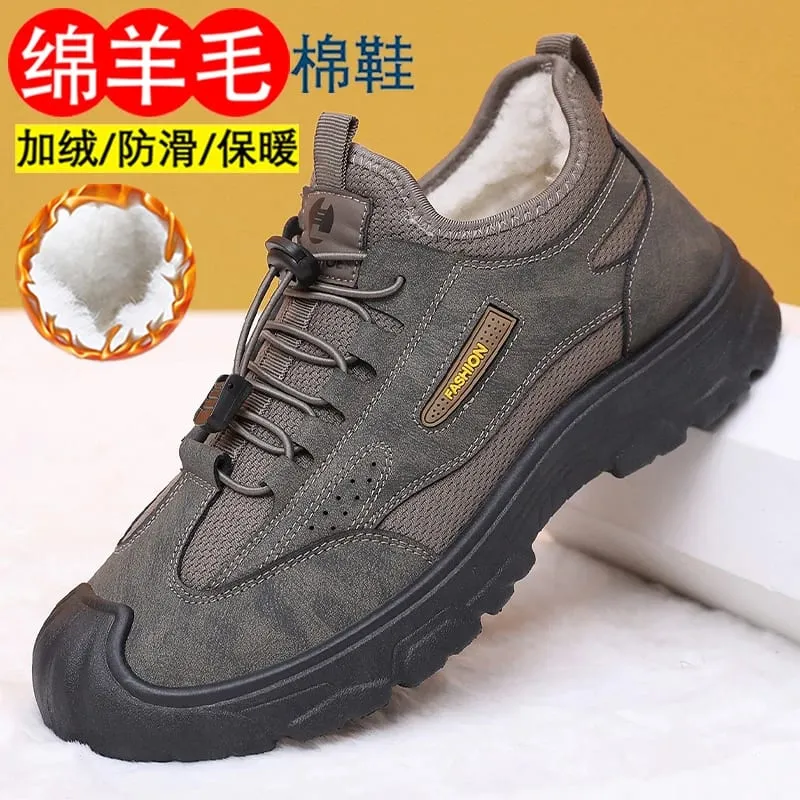
Winter Boots That Actually Do the Job: A Look at Our Fleece-Lined Snow Boots
Let me tell you about a pair of boots we've been selling a lot of this season. When the cold hits and the ground turns nasty, people come in looking for something that will keep their feet warm without costing a fortune. That's exactly where these men's winter snow boots come in. I've handled hundreds of pairs over the years, pulled them out of boxes, checked the stitching, tested the soles on icy pavement outside the shop. So when I say these are worth your attention, it's not just sales talk. The SKU is P3256812826612900 if you want to look them up quickly on our site. We keep things simple here, and these boots are a good example of that.
Let's start with what they're made of. The upper is a durable synthetic material that holds up well against slush, snow, and the kind of wet that seeps into cheaper shoes within a week. Inside, there's a thick fleece lining that runs from the toe box all the way up the ankle. Run your hand inside and you feel it immediately — that soft, dense warmth that doesn't flatten out after a few wears. The outsole is where I pay closest attention, and this one is genuinely non-slip with a deep tread pattern. I've watched customers walk out into a snowy parking lot and not do that little shuffle-step you see with smooth-soled boots. The stitching along the seams is tight and even, no loose threads hanging off. They're not designer boots, and I won't pretend they are, but the build quality for the price is honestly better than I expected when I first ordered them.
Now the specifics, because I know people want numbers. These come in sizes 39 through 44, which covers most men's foot sizes in our range. Price is $31.02 — that's it, no hidden extras. You'll find them in the colors listed on the product page. The boot itself sits at about ankle height, giving you freedom to move without feeling like you're wearing bricks on your feet. The non-slip outsole uses a rubber compound that stays grippy even when temperatures drop. And the fleece lining is throughout, not just a thin patch near the toes. One thing I always tell folks: don't guess your size. The supplier even reminds buyers to measure their foot length and contact customer service if they're unsure. That's good advice. A boot that's too tight ruins the warmth; too loose and you're sliding around.
So what do you actually use these for? More than you'd think. Imagine walking the dog on a freezing January morning — the sidewalk's icy, you're half awake, and the last thing you need is cold, wet feet. These handle that without fuss. Second scenario: shoveling the driveway or clearing snow off the car. You're out there for an hour, stomping around, and the non-slip sole keeps you upright on packed snow. Third, and this is a big one for our customers, casual winter hikes or walks on trails that get muddy and slick. They call them hiking boots, and while I wouldn't take them up a mountain, for a local trail or a walk through the park after a snowfall, they're perfect. Some guys wear them as everyday dad shoes too — school run, grocery store, that kind of thing. They don't look out of place anywhere.
Using and maintaining them is straightforward, which I appreciate. Wear them with a decent pair of wool socks for the coldest days. After you come inside, knock the snow off and let them dry at room temperature — never put them on a radiator or direct heat, that's the fastest way to crack the sole and ruin the fleece. If they get muddy, wipe them down with a damp cloth and mild soap. Once or twice a season, you can treat the upper with a waterproof spray if you want extra protection, but honestly, they handle most wet conditions fine on their own. Store them somewhere dry, not a damp garage. That's it. No complicated routine. I've seen boots like these last three or four winters with basic care.
Now, the honest part. Pros: warm, grippy, affordable, and the sizing range covers a lot of men. The fleece doesn't itch, and the sole doesn't harden up in freezing temps like some cheap rubber does. Cons? They're not fully waterproof if you stand in deep puddles for a long time — the synthetic upper resists wet but isn't a rubber boot. The fleece lining makes them a bit bulky, so if you have wide feet, consider going up a size. And they're not stylish in a dressy sense. If you need something for a formal office, these aren't it. But for winter practicality, the cons are minor.
From a design standpoint, here's why this works. The combination of a fleece lining and a non-slip outsole addresses the two biggest winter foot problems: cold and falling. The ankle height gives support without restricting movement, which suits both walking and light hiking. The synthetic upper hits a sweet spot — more water-resistant than canvas, less expensive than leather, easier to clean than both. This design suits the guy who wants one pair of boots for everything from errands to snowy walks. It's not for extreme mountaineering or fashion shows. It's for real life.
If that sounds like you, come grab a pair. Just measure your foot first, and if you're between sizes, ask us. We'd rather help you get it right than have you return a pair.