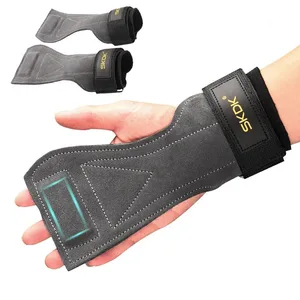
Let me tell you about the pair of gloves I keep reaching for in the shop whenever someone asks me what they actually need for pulling days. It's this two-piece set — the gym gloves with the built-in wrist wraps and palm pads — and at $15.53, it's the kind of thing I've handed across the counter more times than I can count. I've stocked a lot of gloves over the years, and most of them fall into two camps: cheap ones that fall apart in a month, and expensive ones that cost more than the weights you're lifting. This set sits in a sweet spot I don't see often, and I want to explain why, honestly, including where it falls short. The SKU on this one is P3256811933234769, so if you're searching our catalog, that's what to look for.
Let's talk build first, because this is where most budget gloves give themselves away. The palm is a layered synthetic leather with a padded grip section stitched across the high-wear zones — the heel of the hand and the base of the fingers. The stitching is double-stitched at the stress points, which matters more than people realize. A single row of thread at the palm seam is the first thing to blow out on cheap gloves, and whoever made these clearly knew that. The backing is a breathable stretch fabric, so your hands don't turn into a swamp halfway through a set. The wrist section is the real standout: instead of a flimsy Velcro tab, you get a proper wrap strap that cinches down over the wrist joint, and the tension is adjustable across a decent range. The material has a slight give but doesn't feel like it'll stretch out permanently after a few weeks. That's a hard balance to hit at this price.
Now the specifics, because I know people want numbers before they buy. You're getting two pieces in the pack — one for each hand — and they're sized in standard sizes, so you order the same size you'd wear in a normal workout glove. If you're between sizes, go up, since the wrist wrap tightens independently of the glove fit. You've got three color options to choose from, all of them dark enough that chalk dust and iron rust won't make them look wrecked after a couple weeks. The palm pad adds a few millimeters of cushioning without turning your grip into a brick, and the wrist wrap extends a few inches up the forearm when fully tightened. Total weight per glove is light enough that you won't notice them in your bag. They're not bulky, and that's on purpose.
So what do you actually do with them? Three scenarios come up constantly with customers. First, deadlifts and heavy rows — the wrist wrap is what sells it here, because when you're pulling serious weight, wrist stability stops being optional. Second, pull-ups and lat pulldowns, where the palm padding saves you from the callus-tearing that turns a good workout into a week of regret. Third, and this one surprises people, kettlebell work and high-rep dumbbell circuits, where sweaty hands are the enemy. I've also had customers buy them for yard work and moving furniture, which tells you something about how versatile the grip is. They're not just gym gear.
Using them properly is simple. Slip your hand in, pull the wrist strap snug — not so tight that your fingers go numb, just enough that the wrap feels locked — and secure the Velcro. For pull days, tighten more; for lighter lifting, keep it relaxed. Maintenance matters more than most people think. Don't machine wash them. Hand wash in cool water with a little mild soap, squeeze them out, and air dry away from direct heat. Heat is what kills the synthetic leather and the elastic in the strap. If they get sweaty, let them dry fully between sessions, and they'll last a long time. A little chalk buildup on the palms is fine; just wipe it off so the grip doesn't get slick. Treat the Velcro kindly, too — keep it clear of lint so it keeps holding.
Pros, honestly: the wrist wrap is genuinely supportive, the padding is in the right places, the price is hard to argue with, and the build quality punches above its weight class. Cons, and I won't sugarcoat: the sizing runs a touch snug, the synthetic leather will eventually crack if you leave them in a hot car, and they're not going to replace a dedicated heavy-duty wrist wrap for maximal squat attempts. If you have very large hands, the standard sizes might feel tight even at the top end. These are real limitations, not dealbreakers, but you should know them before you buy.
Here's the expert-style breakdown, and this is the part I'd tell a friend. The design works because it splits one problem into two: the palm handles friction and impact, while the wrist strap handles stability and load transfer. Most cheap gloves try to do both with one flimsy layer, and they fail at both. This pair separates the jobs, and the mechanics follow — a stabilized wrist lets you pull with better alignment, and padded palms let you hold heavier loads longer without grip failing first. It suits beginners building their first real pull routine, intermediate lifters who want support without dropping eighty dollars on a name brand, and anyone doing high-volume grip work who goes through gloves fast. It's not for the competitive powerlifter chasing a max single, but for the other ninety percent of us, it's a smart, honest purchase.