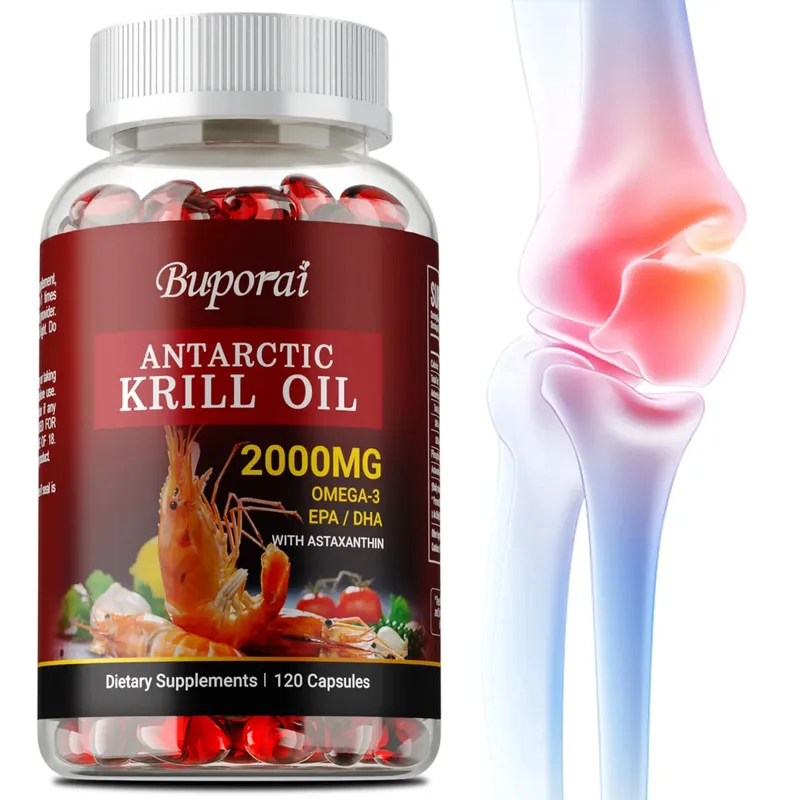
# Antarctic Krill Oil 2000MG: The Honest Rundown From Someone Who Actually Sells It
I've been stocking supplements for a long time, and I can tell you that most of what crosses my counter is forgettable. Krill oil is not one of those products, but it's also one of the most misunderstood. So when we started carrying this Antarctic Krill Oil 2000MG — SKU P3256809920555545 — I made a point of learning exactly what's inside the bottle before I put it on the shelf. What follows is my plain-English take, no marketing gloss, just what you'd get if you cornered me at the register and asked.
Let's talk about what this stuff is actually made of, because that's where the story starts. The oil is wild-caught from Antarctic waters, and that word "Antarctic" matters more than people realize. That region has very little exposure to the industrial marine traffic and runoff you find in other fishing zones, so the krill come from what's genuinely one of the cleanest ecosystems left on the planet. Each capsule delivers 2000MG of krill oil, and the whole point of krill versus plain fish oil is the delivery format. The omega-3s here — EPA and DHA — are bound to phospholipids rather than sitting in triglyceride form like most fish oils. That structure is what makes krill easier on the stomach for a lot of folks and, according to the research I've read, easier for the body to actually absorb. Then there's astaxanthin, the pigment that gives krill its reddish tint. It's a potent antioxidant that also happens to protect the oil from going rancid, which is a quiet quality advantage you don't notice until you've tried a fish oil that's turned on you.
Now the specifications, because I get asked this constantly. This is a 2000MG strength product, sold in standard bottle sizes, and the serving is straightforward — two capsules once daily. The capsules themselves are softgels, the usual oblong shape, and they're not enormous. I've handed these to plenty of customers who swear they can't swallow pills, and the feedback is generally that these go down fine with a glass of water. As for colors — this is a supplement, not a t-shirt, so the "colors available" are basically the natural reddish-brown of the oil itself, which varies slightly from batch to batch because it's a natural product. No dyes, no added coloring. If you want a uniform-looking capsule every single time, you're going to be disappointed by nature in general. Storage-wise it's shelf-stable and the stated shelf life is two years, which gives you plenty of runway if you order a couple bottles at once. Shipping goes out within 48 hours on weekdays.
What does it actually do in daily life? Three real scenarios. First, the cognitive one: I have customers in their fifties and sixties who take it for brain fog and general sharpness, the kind of person who walks into a room and can't remember why. Second, the heart-health crowd — people whose doctors have told them to get more omega-3s, who don't want to eat salmon four nights a week, and who find krill sits better than the fish oil capsules that repeat on them. Third, the everyday joint-and-immunity users, folks who take it because astaxanthin is a legit antioxidant and they'd rather get it from a whole-food-derived source than another pill from a lab. It doesn't replace a doctor's advice and it isn't a magic switch. It's a foundational supplement, and foundations show up in years, not days.
Using and keeping it is about as simple as it gets: two capsules daily, and I'd suggest taking them with a meal that contains some fat, since that helps absorption. Set a reminder on your phone, because consistency is the whole game here. Store the bottle in a cool, dark cupboard — not the bathroom, please, the humidity is brutal on supplements — and keep the lid sealed. You don't need to refrigerate it, though some people do and nothing bad happens. Check the printed expiry on the bottom before you buy multiples.
Now the honest part. Pros: strong 2000MG dose, phospholipid-form omega-3s that tend to be gentler, natural astaxanthin included rather than tacked on, wild-caught sourcing from clean water, no fishy burps for most people, and a sensible daily dose of two capsules. Cons: I'm not going to pretend it's the cheapest omega-3 on the shelf. Krill costs more to harvest sustainably than bulk fish oil, period. If you're someone who reacts poorly to shellfish, be careful — krill are crustaceans, and this isn't for you. And if you're looking for an instant, dramatic effect, this is the wrong category entirely. It's subtle by nature.
Here's the expert-style analysis, the part where I stop being a shopkeeper and think about the engineering of the thing. The formula works because of the synergy, not any single ingredient. You've got EPA and DHA for the cardiovascular and cognitive basics, and astaxanthin layered on as both a functional antioxidant and a natural preservative. The phospholipid delivery system is a small detail with outsized practical consequences — better absorption, less reflux, more comfortable daily use. The 2000MG dose is sized to be meaningful without being a horse pill situation. This suits the person who's serious about long-term brain and heart support but wants it in a form their stomach won't argue with, and who values clean sourcing over rock-bottom price. It's for the careful shopper, not the bargain hunter.