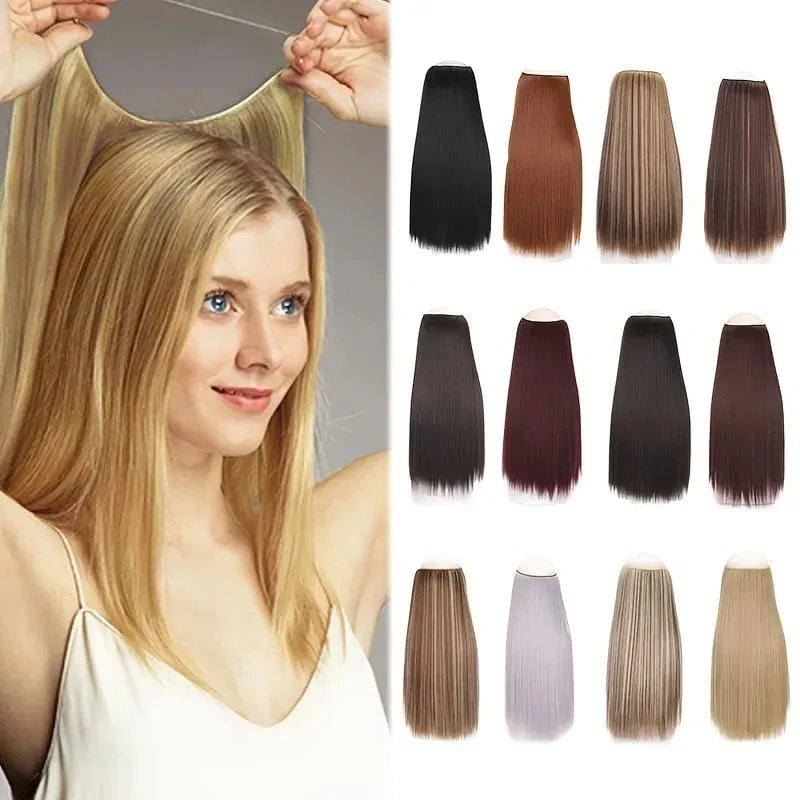
Finally, a Hair Piece That Doesn't Require a Degree in Wig Installation
I've been selling hair accessories for a long time now, and I can tell you the number one reason people return clip-in extensions is that they can't figure out how to hide the clips. The second reason is that the color doesn't match. So when this synthetic ombre piece came across my desk — SKU P3256805991201159 — I was skeptical at first. No clips? Just a hairpiece? But after handling a few dozen of these and actually wearing one around the shop for a day, I get it. This thing solves a problem most extensions create. Let me walk you through it the way I'd explain it to a friend who walked into my store.
First, let's talk about what this thing is actually made of. It's a synthetic fiber hairpiece — chemical fiber, to be precise, so don't expect human hair behavior here. The strands have a nice natural straight texture that mimics real hair pretty convincingly at arm's length and beyond. The build quality is solid for the price point. The cap section is lightweight, and the fibers are sewn in tightly enough that you're not going to shed half the piece on your bathroom floor. That said, because it's synthetic and fresh out of the factory, there will be some floating hairs when you first unpack it. That's not a defect, it's just the manufacturing reality with this type of product. Comb it out before wearing and you're fine.
Now the specs, because I know you're wondering. This piece comes in 22 inches, which hits right around the middle of your back for most people — a really flattering length that doesn't look costume-y. You've got five color options in the ombre blonde-brown-black family, so whether you're going for a subtle dark-to-light transition or something more dramatic, there's probably a shade that works. The ombre effect is pre-blended, which honestly saves you a salon trip. It's one size, one length, straightforward. At $12.09, you're paying drugstore prices for something that performs well above that.
So what do you actually use this for? Real-life scenarios, not fantasy stuff. Scenario one: you've got a wedding or event coming up and your natural hair is having a flat, limp day. You pop this in, blend the front section with your own hair, and you've got instant volume and length without a salon appointment. Scenario two: you're growing out a bad haircut or a color you regret, and you need something to bridge the gap while your real hair catches up. This covers that awkward phase nicely. Scenario three, and this is the one I hear most from customers — you just want to look a little more put-together for date night or a work presentation without committing to a permanent change. This is your low-stakes experiment.
Using it is about as simple as it gets. You section your hair, place the piece where you want the added volume, and blend your natural hair over the top of it to hide the base. No clips digging into your scalp, no glue, no tape. Maintenance is where you need to pay attention. Because it's chemical fiber, it can get slightly knotted with wear — especially if you're wearing it on windy days. Just comb it gently with a wide-tooth comb, working from the ends upward. Don't use heat tools on high settings. A little fabric softener diluted in water sprayed lightly can help with static, which is a synthetic fiber reality. Store it on a hanger or a wig stand when you're not wearing it, not crumpled in a drawer.
The pros are pretty clear: the price is genuinely low, the no-clip design is comfortable for all-day wear, the ombre coloring looks natural, and 22 inches gives you real length without being unmanageable. The cons? It's synthetic, so it won't take heat styling the way human hair does. It will tangle if you neglect it. And the initial shedding when you first comb it out might alarm you if you're not expecting it. It's not a forever product — think of it as a season-long companion, maybe three to six months of regular wear if you take care of it. That's the honest picture.
Here's the expert breakdown, and this is the part I wish more shoppers understood. The reason this design works is that it eliminates the single biggest barrier to entry for extension beginners: clip placement and blending. By making it a single integrated piece rather than a set of individual wefts, it removes the fine motor skills requirement. It suits three types of people best. First, total beginners who've never worn extensions and don't want to invest $200 learning. Second, people with short-to-medium hair who want length for specific occasions rather than every day. And third, anyone who's tried clip-ins, hated the bulk, and wants a lighter alternative. If you're a daily-wear extension veteran who needs heat styling flexibility, this isn't your product. But for everyone else? It's a smart, cheap way to test the waters.